
A two-year-old Range Rover asks more than a Lexus LX in Qatar. At nine years old it asks a little over half.
We compared 710 used Range Rovers, Porsche Cayennes, Mercedes GLEs, BMW X5s and Lexus LXs for sale on BuMotar. A nearly new Range Rover or Cayenne asks more than an LX, a GLE or X5 less. At nine years old and 150,000 km they ask between 37% and 57% of what an LX does.

Bu Motar
23 November 2026 · 6 min read
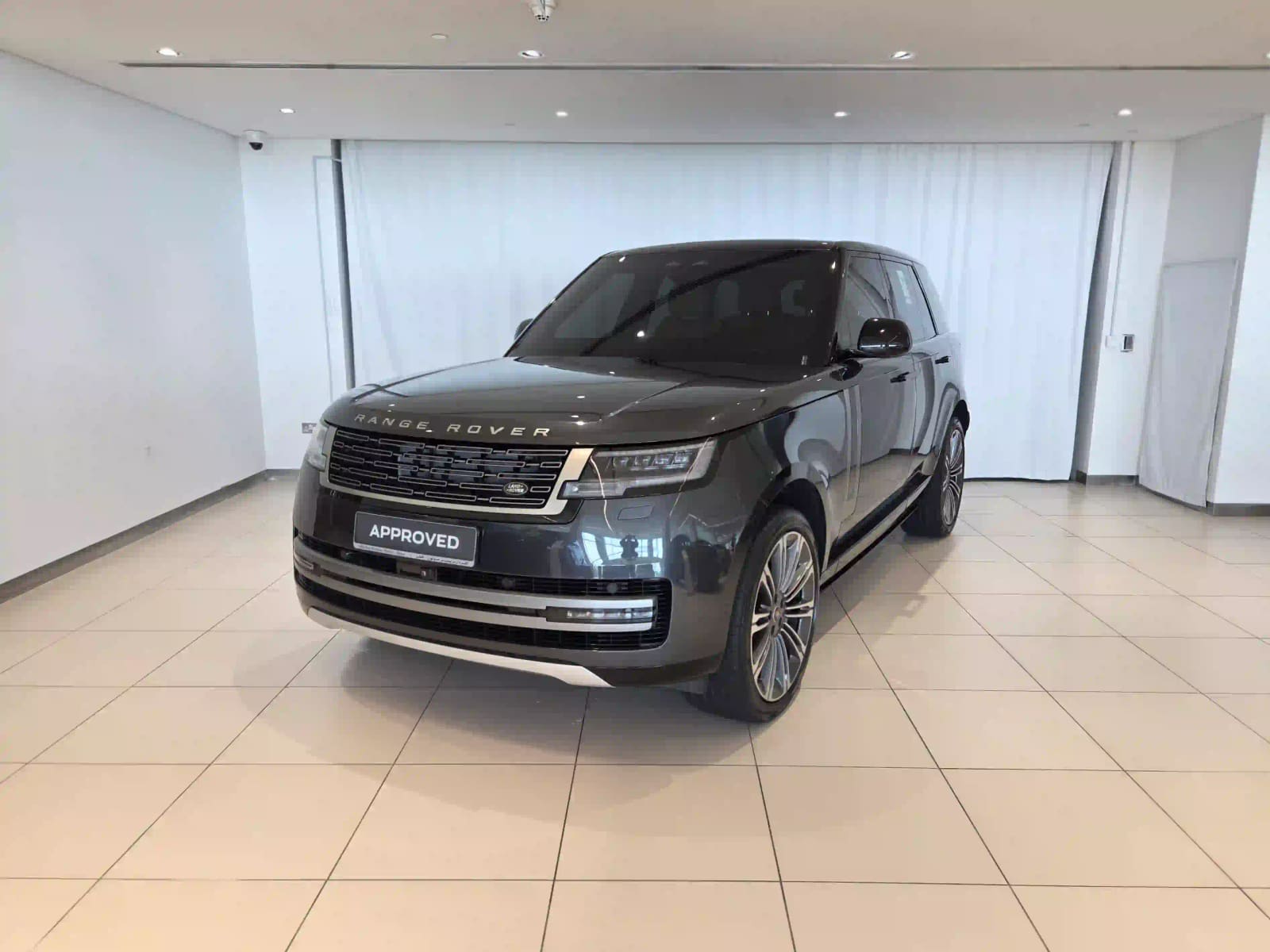
Above QAR 400,000 new, a buyer in Qatar usually chooses between a Lexus LX and a European: a Range Rover, a Cayenne, a GLE or an X5. Ask anyone who has owned one and you will hear the same thing, that the European loses its money faster. We wanted to know how much faster, in riyals, at the ages people actually buy and sell.
On 23 November BuMotar had 13,848 live listings. 710 of them are one of these five cars, from model years 2012 to 2026, with a price of at least QAR 10,000 and an odometer reading. We counted listings that share make, model, trim, year, odometer and price once.
How we counted
Range Rover is the hard one, because sellers file the Sport, the Velar and the Evoque under the same name. We counted a car as a full-size Range Rover only if the seller gave a trim and it was not a Sport, Velar or Evoque: Vogue, HSE, Autobiography and the like. That leaves 125 cars. Another 122 have no trim at all, and we left them out. Adding them back changes the nine-year figure below from about QAR 99,000 to about QAR 92,000, so it does not change the story.
For each car we fitted a simple curve of asking price against model year and odometer, then read off what each one asks at the same age and mileage. We resampled the cars a thousand times to see how firm each figure is.
Same year, side by side
Before any curve, the plain medians for the Range Rover and the LX. They tell the story on their own, because the Range Rover asks less while showing fewer kilometres:
- 2022 to 2024 — Range Rover QAR 449,500 (64 cars, 39,000 km). LX QAR 395,000 (84 cars, 63,500 km).
- 2018 to 2021 — Range Rover QAR 150,000 (19 cars, 96,000 km). LX QAR 228,500 (80 cars, 142,500 km).
- 2014 to 2017 — Range Rover QAR 72,000 (40 cars, 133,500 km). LX QAR 126,500 (92 cars, 269,000 km).
Both cars changed generation at the same moment. Land Rover revealed the current Range Rover in London on 26 October 2021, and Lexus revealed the current LX on 13 October 2021. AAB launched the new LX in Doha at the end of February 2022, according to both The Peninsula and Gulf Times. So the 2022 to 2024 cars on both sides are the new design, and everything older is the old one. Some of the fall from the newest band to the next is the step down to an older car, not only age.
Read off the curve
Holding age and mileage equal, here is what each car asks. The ranges are where 95% of the resampled answers fell.
- Two years old, 40,000 km — Range Rover QAR 484,000. Cayenne QAR 468,000. LX QAR 428,000. GLE QAR 291,000. X5 QAR 258,000.
- Five years old, 90,000 km — LX QAR 291,000. Range Rover QAR 243,000. Cayenne QAR 235,000. GLE QAR 170,000. X5 QAR 142,000.
- Nine years old, 150,000 km — LX QAR 175,000. Range Rover QAR 99,000. Cayenne QAR 95,000. GLE QAR 85,000. X5 QAR 65,000.
Against the LX, the Range Rover asks 113% at two years old (107% to 120%), 84% at five (80% to 88%) and 57% at nine (53% to 61%). The Cayenne follows almost the same path: 109%, 81%, 54%. The GLE starts at 68% and ends at 49%. The X5 starts at 60% and ends at 37%.
Between two and nine years old, a Range Rover or a Cayenne keeps about a fifth of its asking price. An LX keeps about two fifths.
In riyals, that is about QAR 385,000 gone from a Range Rover between those two points, QAR 373,000 from a Cayenne and QAR 253,000 from an LX. The GLE and the X5 lose less money only because they ask less to begin with. They keep about 29% and 25%.
The curves also show where the loss comes from. Fitted on its own, the LX loses about 10% a year and 14% per 100,000 km. The Range Rover loses about 16% a year and 30% per 100,000 km, the Cayenne 18% and 17%, the GLE 12% and 27%, the X5 15% and 22%. Kilometres cost a Range Rover twice what they cost an LX. Buyers here seem to treat a high-mileage European as a repair bill and a high-mileage LX as a car with plenty left. Our listings show the judgement, not whether it is correct.
This agrees with what we found for the Defender against the Land Cruiser on 19 November. A Land Rover starts above its Toyota-built rival and ends below it. The Cayenne, GLE and X5 do the same, so this is not only about one maker.
Who sells them, and how long they sit
Dealers list most of these cars: 77% of GLEs, 66% of Range Rovers, 63% of X5s, 62% of LXs and 48% of Cayennes. The median listing has been on our site for 116 days for an LX, 122 for a GLE, 124 for a Range Rover, 149 for a Cayenne and 238 for an X5. X5s sit about twice as long as the others, which suggests their asks are, if anything, still too high.
What to do with this
- If you are buying at five to ten years old — This is where the European SUVs are cheap. A nine-year-old Range Rover or Cayenne asks a little over half what an LX of the same age and mileage does. Budget the difference for maintenance, because buyers are pricing in exactly that. Get a pre-purchase inspection that covers the air suspension and the cooling system, and the service history, before you agree a price.
- If you are buying nearly new — A two-year-old Range Rover or Cayenne asks more than an LX, and on these figures will lose about twice the share over the next seven years. If you plan to keep a car for that long and sell it, the LX costs less in depreciation even if it costs more to buy.
- If you are selling a European SUV — Price against your own model's curve, not against an LX. A five-year-old Range Rover at 90,000 km sits around QAR 243,000, and kilometres hurt it more than they hurt the Lexus. Full service records are the one thing that can narrow the gap.
- If you are holding — A Range Rover or Cayenne loses the most riyals in its first five years: on the curve, QAR 233,000 to 241,000 between two and five years old, and QAR 140,000 to 144,000 over the four years after. There is less left to lose. A nine-year-old one is unlikely to fall far, but kilometres still cost it roughly 30% per 100,000.
What we do not know, and what would change the answer. These are asking prices, not sale prices; if European SUVs sell further below their asks than LXs, the real gap is wider. The groups are small: 56 X5s, 87 GLEs, 99 Cayennes and 125 Range Rovers, against 343 LXs, and some ages rest on a handful of cars. Trim and engine matter and many sellers do not state them: a Cayenne Turbo and a base Cayenne, or a V8 and a six-cylinder Range Rover, are different purchases. Each of these cars changed generation at least once in this span, and the curve treats age as smooth across those changes, which it is not. We did not use the 122 Range Rovers with no trim. We have not compared running costs, parts prices or reliability, any of which could make the cheaper car cost more to own. Removing duplicates may have merged two genuine cars. Days on our site are not days on the market. If sale records showed the Europeans selling close to their asks, or if the LX's ask turned out well above what buyers pay, the gap would be smaller than this.
Sources
Prices on BuMotar
Go deeper
Thinking of selling your car?
List it free on BuMotar. Buyers contact you directly, and we take no commission.
List your car free